Codex: Interstellar Power Dynamics
.webp)
HISTORICAL_ARCHIVE
Codex: Interstellar Power Dynamics
RECORD_DATE: December 1, 2025
COMPLETE_HISTORICAL_FILE
1. Interstellar Union (ISU) – Protagonist Authority
- Strengths:
Corridor regulation authority
-
Standardisation of AI, tech, and interstellar law
-
Trusted by multiple species for fair arbitration
Weaknesses:
-
Limited direct military power outside Union Starfleet
-
Reliant on compliance; rogue actors can circumvent
Interactions:
-
Galactic Concord: Constant ideological friction. Concord criticises ISU for being too liberal, permissive, and slow to enforce uniformity.
-
Federated Galactic Authority: Technological and regulatory rivalry. FGA contests corridor restrictions and attempts to monopolise banned tech.
-
Corridor Compact: Cooperative, but cautious. Compact respects ISU authority but maintains independence due to technical expertise.
-
Space Accord: Collaborative. ISU recognises Accord mediators as neutral agents to defuse disputes outside direct Union influence.
2. Galactic Concord
-
Philosophy: Security, ideological uniformity, and stability over individual freedom.
-
Conflict:
Sees ISU’s liberal, multi-species governance as weak.
- Patrols militarised systems to suppress dissent, often pre-emptively.
Alliances: Occasional collaboration with FGA when corridor access aligns with Concord security priorities.
3. Unified Systems Assembly (USA)
-
Philosophy: Bureaucratic efficiency, diplomacy, and scientific standardisation.
-
Conflict:
Weak in rapid military response, sometimes undermined by ISU Starfleet action or Concord interventions.
Interaction:
- Provides ISU with technical guidance, corridor simulations, and AI-optimised predictions for expansion.
4. The Space Accord
-
Philosophy: Neutral trade law enforcement and dispute arbitration.
-
Conflict: Minimal, only challenged when rogue states or corridor anomalies disrupt commerce.
-
Interaction:
Acts as ISU’s neutral partner for conflict resolution, especially in contested systems.
5. Commonwealth of Systems
-
Philosophy: Post-scarcity civil liberties, open tech, ideological freedom.
-
Conflict:
Ideologically opposed to Concord, FGA, and other authoritarian systems.
- Often resists ISU when regulations seem restrictive, but cooperation occurs when corridors or interstellar trade are involved.
Interaction:
- Serves as a testing ground for ISU policy implementation in post-scarcity environments.
6. Corridor Compact
-
Philosophy: Pure technical stewardship of corridor networks.
-
Conflict: Minimal, but occasionally clashes with ISU or FGA over prioritisation of corridor traffic.
-
Interaction:
ISU relies heavily on Compact expertise for stable corridor operation.
- Compact ensures corridors remain safe, neutral, and optimally aligned.
7. Federated Galactic Authority (FGA)
-
Philosophy: Technocracy, militarism, control of advanced/banned tech.
-
Conflict:
Primary rival to ISU in corridor regulation and restricted technology oversight.
- Attempts to circumvent ISU’s standardisation to consolidate technological dominance.
Interaction:
- ISU maintains a wary stance; disputes often result in standoffs or corridor traffic blockades.
8. Pan-System Council
-
Philosophy: Scientific, cultural, and archaeological cooperation.
-
Conflict: Rare, only when discoveries challenge ISU’s operational assumptions or corridor safety.
-
Interaction:
ISU consults Pan-System Scholars for anomaly assessment before opening or allowing corridor access.
9. The Ultimate Continuum
-
Philosophy: Post-scarcity technocracy, AI-integrated, aloof.
-
Conflict: Minimal; Continuum avoids politics unless directly threatened.
-
Interaction:
ISU’s access to Continuum knowledge is limited; occasional AI intermediaries assist with corridor simulations or existential-risk planning.
10. The Concordance
-
Philosophy: Philosophical and spiritual exploration, non-militaristic.
-
Conflict: Minimal; ideological only.
-
Interaction:
Provides ISU with historical and precursor research context, especially regarding corridor origins and anomalies.
- Concordance Observers often warn ISU of misinterpretations of Ancient infrastructure.
Corridor Control and Influence
-
ISU: Central authority and arbiter. Maintains policies for fair access, corridor traffic prioritisation, and crisis response.
-
Corridor Compact: Technical operators. Maintain corridor integrity and stabilise anomalies; strategic leverage is high.
-
FGA & Concord: Attempt covert manipulation, control chokepoints, or monopolise high-traffic corridors for political and economic gain.
-
Commonwealth: Uses corridors to expand trade and experimentation with minimal interference.
-
Space Accord: Serves as mediator when corridor access disputes escalate.
Key Principle: Corridor access equals influence, not absolute control. Even the ISU cannot unilaterally dictate movement without collaboration with the Compact, Starfleet, and allied factions.
Conflict Dynamics
Ideological Tension:
- ISU’s democratic-liberal philosophy vs. Concord’s authoritarianism vs. Commonwealth’s libertarian post-scarcity ideals.
Corridor Competition:
- FGA attempts to override regulations; ISU enforces rules with Compact and Starfleet assistance.
Technological Edge:
-
ISU uses AI to simulate corridor traffic, prevent misuse, and optimise exploration.
-
FGA and Continuum maintain secretive R&D to surpass ISU predictive models.
Diplomacy and Mediation:
-
Space Accord and Unified Systems Assembly act as stabilisers.
-
Concordance and Pan-System Council provide research-based insights that prevent missteps.
Rogue Systems / Black Markets:
-
Any non-aligned or post-collapse world exploits corridor nodes illegally.
-
ISU monitors via Starfleet patrols; Compact ensures the physical corridor integrity.
**Summary of the ISU’s Role:**The Interstellar Union is the galactic protagonist because it represents coordination, regulation, and stability in a chaotic, AI-driven, corridor-dependent galaxy. Its moral authority stems from governance of shared infrastructure, not domination of cultures or military supremacy. It’s constantly tested by rival ideologies, independent systems, rogue actors, and the strategic challenge of corridors—placing it at the centre of Legarune’s tension, politics, and exploration narrative.
Curated Lore
RANDOMIZED ARCHIVE SELECTION

Drexia Varr: Neo-Futuristic Warrior Art

Rexa Monroe: Gym-Fit Fighting Character Concept
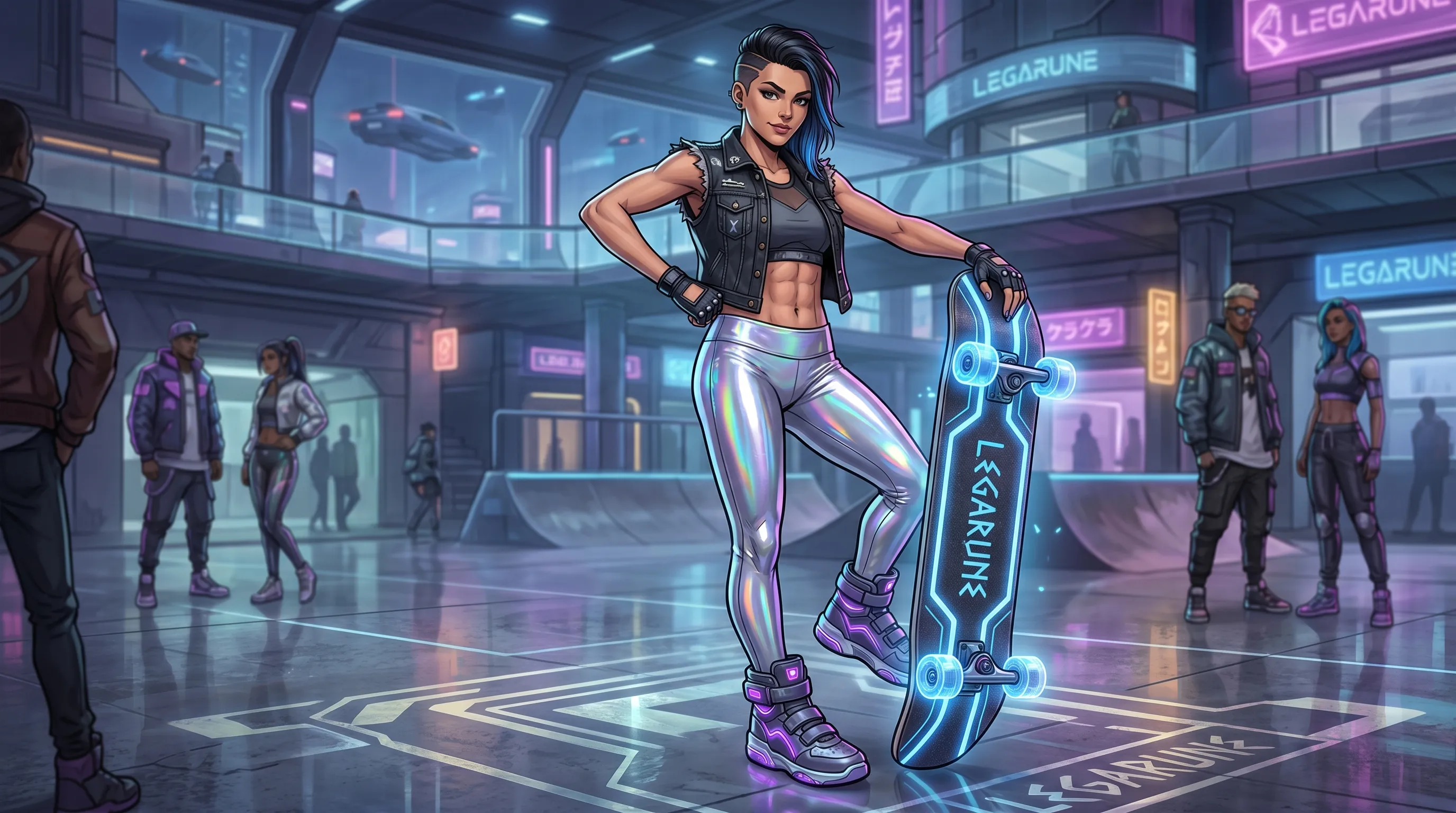
Renn Kolvex: Board-Rider Courier

Nyra Silver: Music Artist Chracter Concept
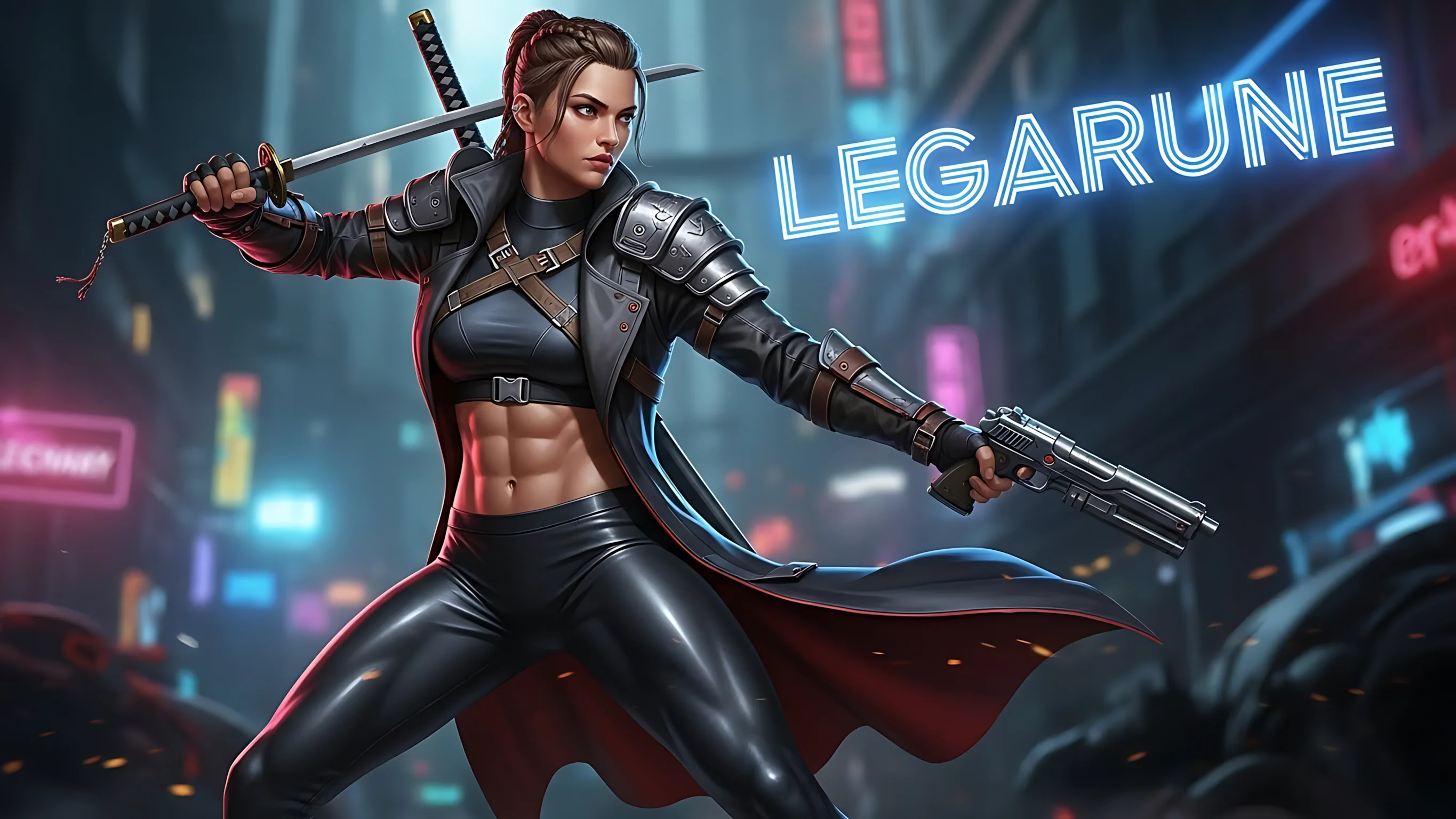
Ellis Quinn: Katana Wielding Warrior
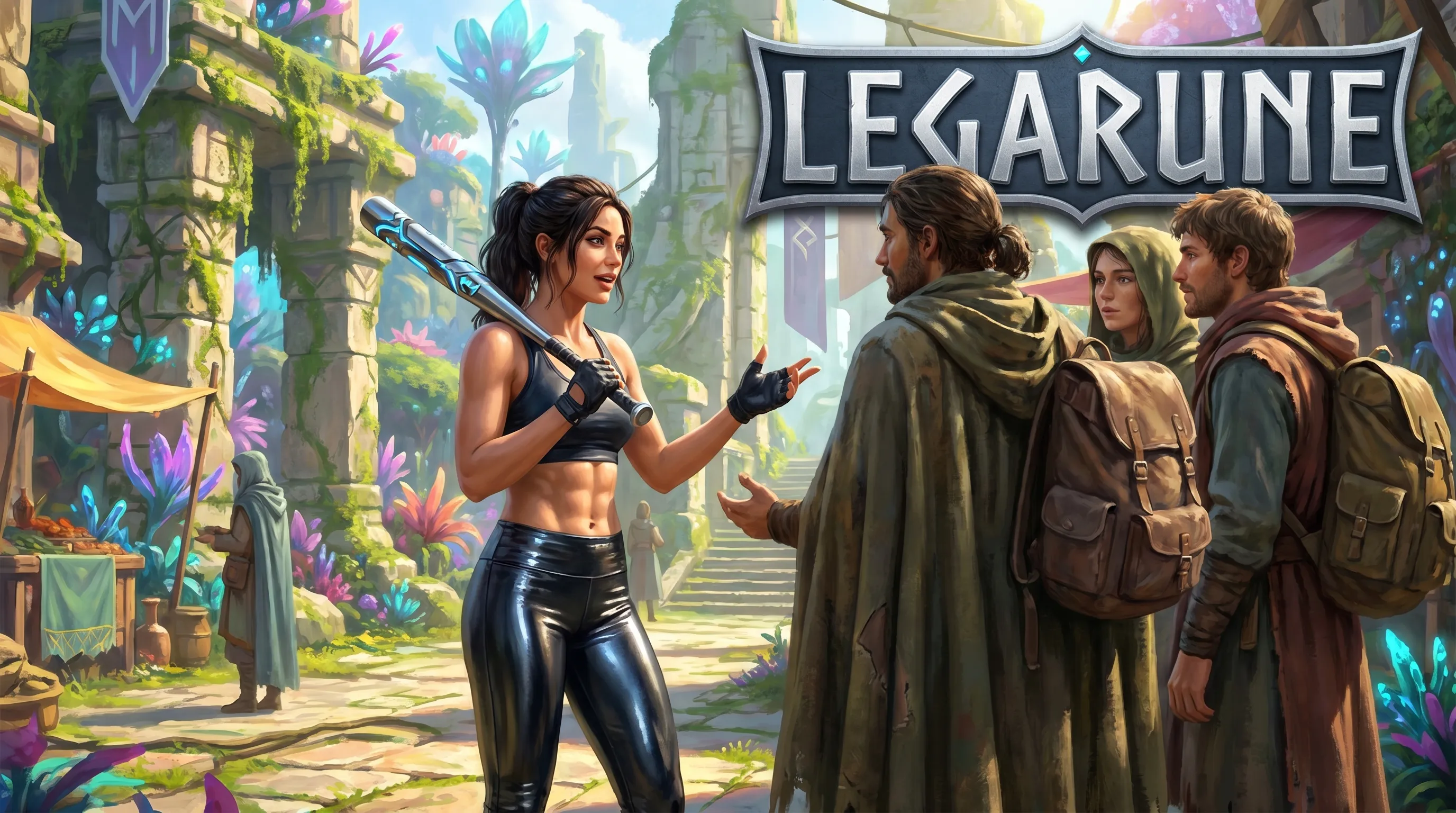
Kessa Vro: Bat-Wielding Enforcer
.webp)
Llyn Bryn, the Elder Lorewright
Founder & Keeper of the Legarune Chronicles
Welcome to Legarune a living universe where science fiction and fantasy intertwine. I weave together art, characters, and worlds to inspire creativity and invite you to journey through a galaxy of imagination. Every post here is a fragment of a larger tapestry, waiting for curious minds to explore.
STATUS: ARCHIVE ACTIVE // SYSTEM: ONLINE // UPTIME: CONTINUOUS